Biodesign the process used in design for health
Biodesign is a design approach that uses biology and the life sciences as an inspiration and resource for innovation in various fields, including health.
Part of the guide Design for Health
Today we’re talking about biodesign and later we’ll go into detail about each stage of this process.
Biodesign is a design approach that uses biology and the life sciences as an inspiration and resource for innovation in various fields, including health.
The Biodesign Innovation Process is a robust multidisciplinary and systematic approach to identifying important needs in healthcare, enabling new solutions that improve patient health.
Focus on needs
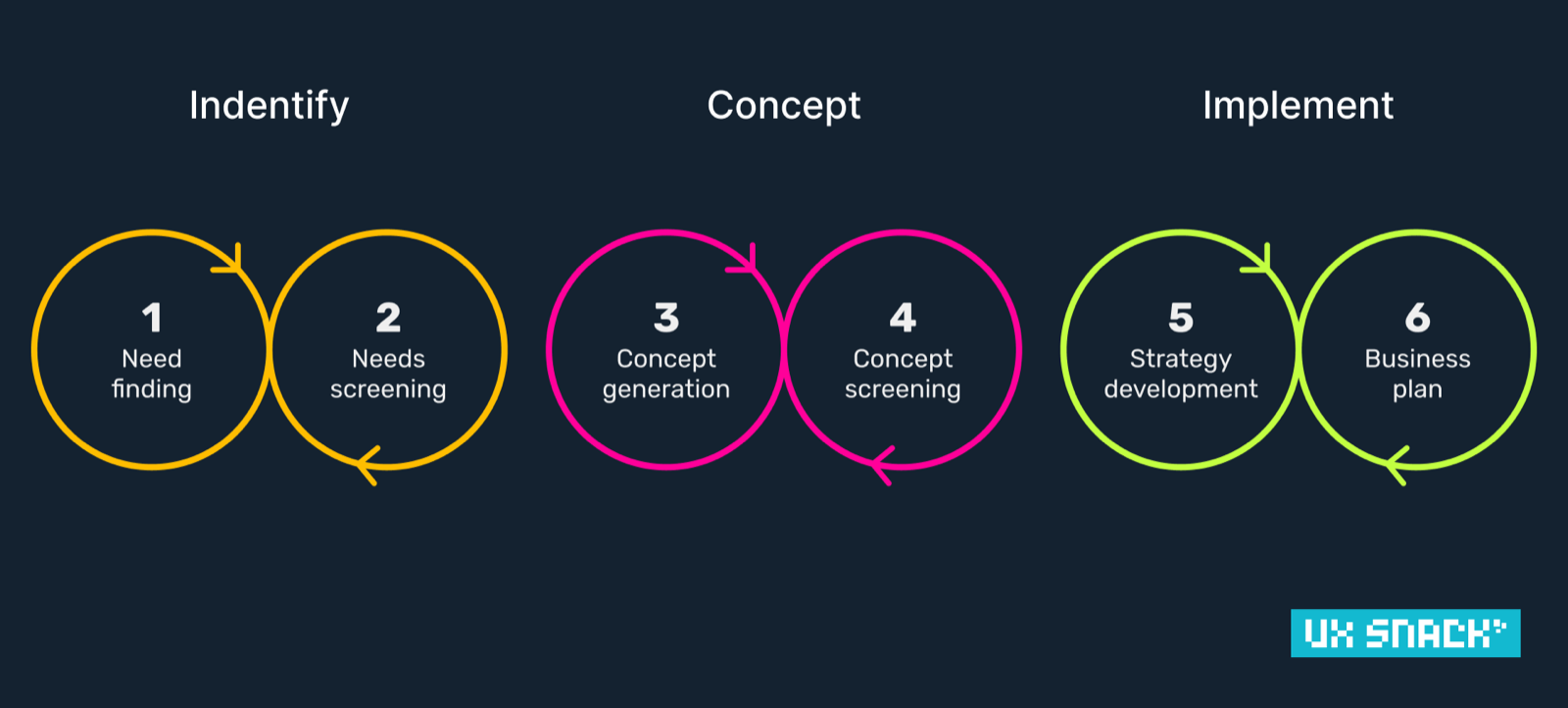
Biodesign is adapted from the design thinking process, which first defines the problem and then implements solutions, always with the needs of users and stakeholders at the centre of concept development. This process centres on identifying needs, generating concepts and implementing them. By creating and testing something, we can continue to learn and improve on the initial ideas.
Benefits of this process
Like Design Thinking and other design methodologies, this process has several benefits:
-
Human-centred approach
-
Efficient and effective solutions
-
Cost reduction
-
Greater sustainability
-
Focus on innovation
Biodesign is a method adapted to explore new innovation solutions at the convergence of healthcare and well-being. The first step in this method is to find needs.
To go deeper, see the Design for Health guide, the post on Patient care journeys, and the complementary methodology in Design Thinking in healthcare.