

The Agentic Era: What Does It Mean for Product Design?
Is "Agentic Era" a new term for you? Let's get you up to speed.

Welcome to the Agentic Era
Is this the first time you've heard of the "Agentic Era"? Let's get you up to speed. In 2025, AI agents are taking on a central role, transforming the way we interact with technology.
Remember the phrase "The best interface is no interface"? Well, that may be truer than ever. AI agents are evolving to execute tasks in the background, reducing the need for traditional interfaces like screens, menus, and buttons.
Imagine simply saying: "Organize my trip to London," and your AI agent takes care of everything for you — no clicks, no searches, no interfaces. This shift suggests that, over the next 10 to 20 years, interface design as we know it may become less relevant.
But before we go further, let's clarify the difference between AI assistants and AI agents.
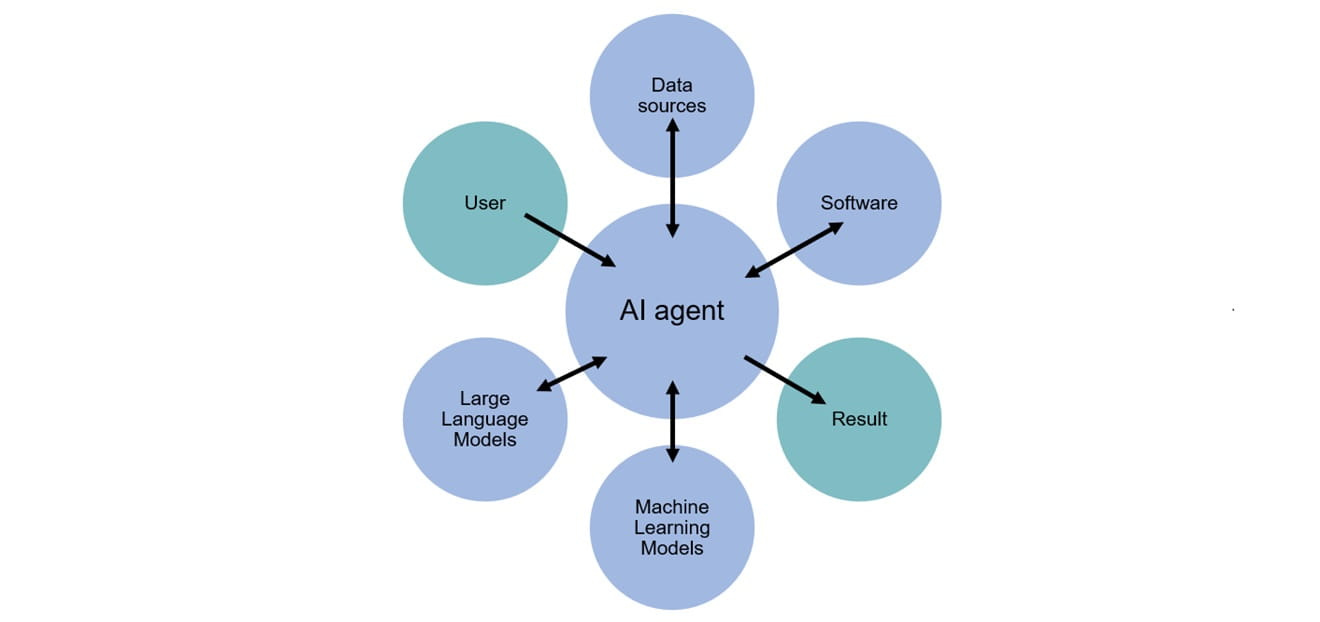
AI Assistants vs. AI Agents: What's the difference?
Key Characteristics of AI Assistants
Reactive: They wait for user commands before acting.
Conversational: They interact in dialogue, answering questions and helping in conversations.
Simple tasks: They execute direct tasks, such as fetching information or setting reminders.
User-dependent: They require constant guidance and input.
Everyday utility: They help with common, quick tasks.
Context understanding: They use NLP (Natural Language Processing) to provide relevant responses.
Easy to use: They feel like a conversation with a friend — no complex setup needed.
Key Characteristics of AI Agents
Autonomous: They initiate and complete tasks without constantly depending on the user.
Goal-oriented: They work toward broader objectives, such as researching trends or planning entire projects.
Proactive thinking: They break complex tasks into steps and execute them independently.
Handle complexity: They deal with intricate problems, from analyzing user data to generating multiple design options.
Scalable: They can manage multiple tasks simultaneously or focus intensely on just one, as needed.
Learn and adapt: They integrate external information (such as online research) to refine their actions over time.
Operate silently: They run in the background and only intervene when necessary.
What changes in User Experience (UX)?
Design for AI interaction
Designers will need to create interfaces that facilitate effective communication between users and AI agents. This includes conversational design and proactive interactions (AI-First UX Design in 2025: Shaping Smarter User Interactions), where the agent anticipates needs and acts on behalf of the user.Adaptive user experience
As agents learn and adapt with use, the experience will evolve over time. Design must anticipate this dynamic to preserve usability (The Future of UX Design: Adapting to a World of AI Agents).Ethical considerations
The growing use of autonomous agents brings concerns about privacy, bias, and transparency. It's essential to create systems that explain AI decisions and build user trust (UX of AI).Required technical knowledge
Designers must understand capabilities such as natural language processing, data analysis, and autonomous decision-making to effectively integrate AI agents into products (AI capabilities and examples).
How Mental Models Will Change
In this new era, it's essential to consider how users perceive and trust AI agents. Users will need to understand and trust AI capabilities in order to leverage their full potential. This will require a shift in mental models from traditional interfaces to more conversational and autonomous interactions.
We are also dealing with dynamic systems that learn and adapt, rather than static interfaces. This means the user experience will evolve over time, requiring designers to think more about long-term adaptability and less about fixed solutions.
Final thoughts
These are exciting times! As designers, we need to stay alert to this shift and be prepared to adapt our practices and skills. The Agentic Era is not just a technological change — it's a paradigm shift in how we think about interaction and product design.
Are you ready for this new era?