

Presenting Design, an Essential Skill
Design presentations come in many formats and play a major role in the professional lives of designers.
“A designer who does not present their own work is not truly a designer.”
– Mike Monteio, Design is a Job
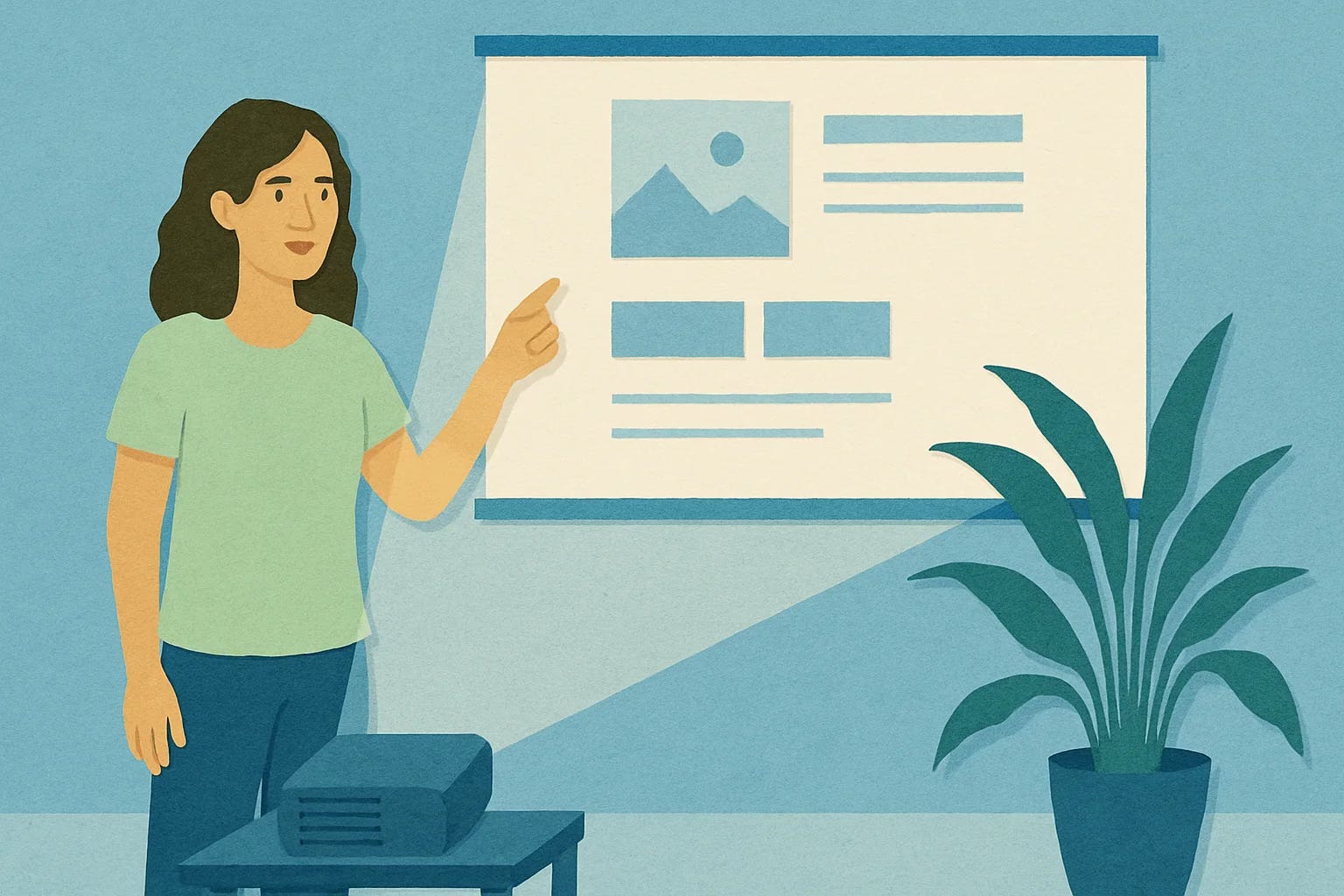
The importance of Design presentations
Helps build relationships with clients, colleagues, or teams;
Makes you accountable for the work you've done;
Gives the opportunity to ask questions directly to the person who executed the work;
Allows you to practice your presentation and storytelling skills.
If you're reading this and you're an Art Director or Team Lead, make sure it's the designers who present their own work. They deserve that space and it only brings advantages for everyone.
If you're a Designer and it has happened that someone else presented your work (which is not that uncommon), try to explain the benefits of presenting your own work yourself.
Rule #1 — Focus on the goals of what you're trying to solve
Rule #1 is simple. Focus on the goals you're trying to solve, not the features. Your entire presentation should be prepared, created, and delivered around the objectives and the problem you're trying to solve.
By focusing on the objectives and less on the visual character or features of what you're presenting, you'll be able to spare yourself unnecessary comments. I'll also spare examples for those with PTSD.
Obrigado por leres a UX Snack Newsletter. Subscreve para receberes novos artigos e suportares o meu trabalho!
Preparing for the presentation
Before we go further, you should know that being nervous is normal. It's our body telling us that what we're about to do matters. It's fine.
Agenda
Presentations should be treated like meetings and as such, they should have an agenda. This makes the session more focused and helps everyone be better prepared.
The agenda should include:
The purpose of the meeting / presentation;
The topics and details of what will be covered;
The expected outcomes.
Tempo e uma vaga ideia das atividades que vão acontecer durante a reunião;
Responsabilidade de cada um envolvido.
Meeting costs
In smaller companies you can skip this part, however when we talk about the enterprise world, having a large number of people in a meeting can be extremely costly. Consider it: a one-hour meeting with 10 people = 10 hours of work.
So we should only invite people who can contribute and those who are essential to the decisions being made.
Preparation
Presenting requires preparation, and that's why this is one of the most important steps. Presenting Design should be taken seriously, whether you're presenting user journeys on a napkin or wireframes in a PowerPoint. Here are some tips:
Write a high-level outline of the idea and goal of the presentation and how you envision it in practice;
Share that first high-level detail with colleagues and collect feedback;
Review the goals and high-level definition of your presentation;
Keep sharing the progress of your presentation within the team as you work on it;
Do an informal internal test. You can do this by presenting to your team members.
Once you feel more confident with your presentation, you can present informally to a selection of stakeholders.
Altera o que vires necessário com base no feedback anterior;
Envia a apresentação antes da reunião.
Presentation
This is the part where you should introduce the topic, explain what you're going to present, and introduce any team member that makes sense.
If you're presenting together with other people, don't forget to help them if you see they're stuck.
Avoid making exhaustive presentations where you go through every single design detail or everything you did. Focus more on how what you're presenting solves the problem you're trying to solve, or how it aligns with the initiative's objectives.
Also keep in mind:
Pay attention to your posture;
Maintain connection with the people you're presenting to;
Show enthusiasm for what you're presenting;
Adopt a slower speaking pace;
Look more at the people and less at the screen where your presentation is;
Never use sarcasm. (yes, this happens)
Receiving feedback
Being prepared to receive criticism is important, especially if you have someone in your audience who doesn't understand the role of Design. It's therefore important to define the format and type of feedback you're looking for. This can be included in the agenda and reinforced at the end of your presentation.
Defining the scope of feedback will also allow those involved to feel more comfortable sharing their opinion since you've created the space for it.
Here are some tips for creating your rules:
Avoid assumptions;
Give feedback in question format;
Avoid personal opinions;
Focus on the Design, not the Designer;
Define where feedback should be given;
Some professionals suggest that feedback should be separate from the meeting. Others place this moment at the end of the presentation.
My advice and what has worked best for me is to leave a section at the end of the presentation just to clear up doubts about what was presented, and to schedule a second, separate, short meeting for feedback.
During the time between the presentation and the feedback meeting, I additionally ask stakeholders to send their feedback by email. — This is very important.
Conclusion
I may have gone a bit long this time, but I hope this information has been useful. Don't forget to leave a comment, subscribe to receive the next articles in your email, and follow my Instagram — https://www.instagram.com/uxsnack.design