

What is Conversational AI?
Understand the fundamentals, the legacy of chatbots, and what changes in experience design.

Today, to break the — let's say, mind-blowing — pace, we're going back to basics on conversational AI.
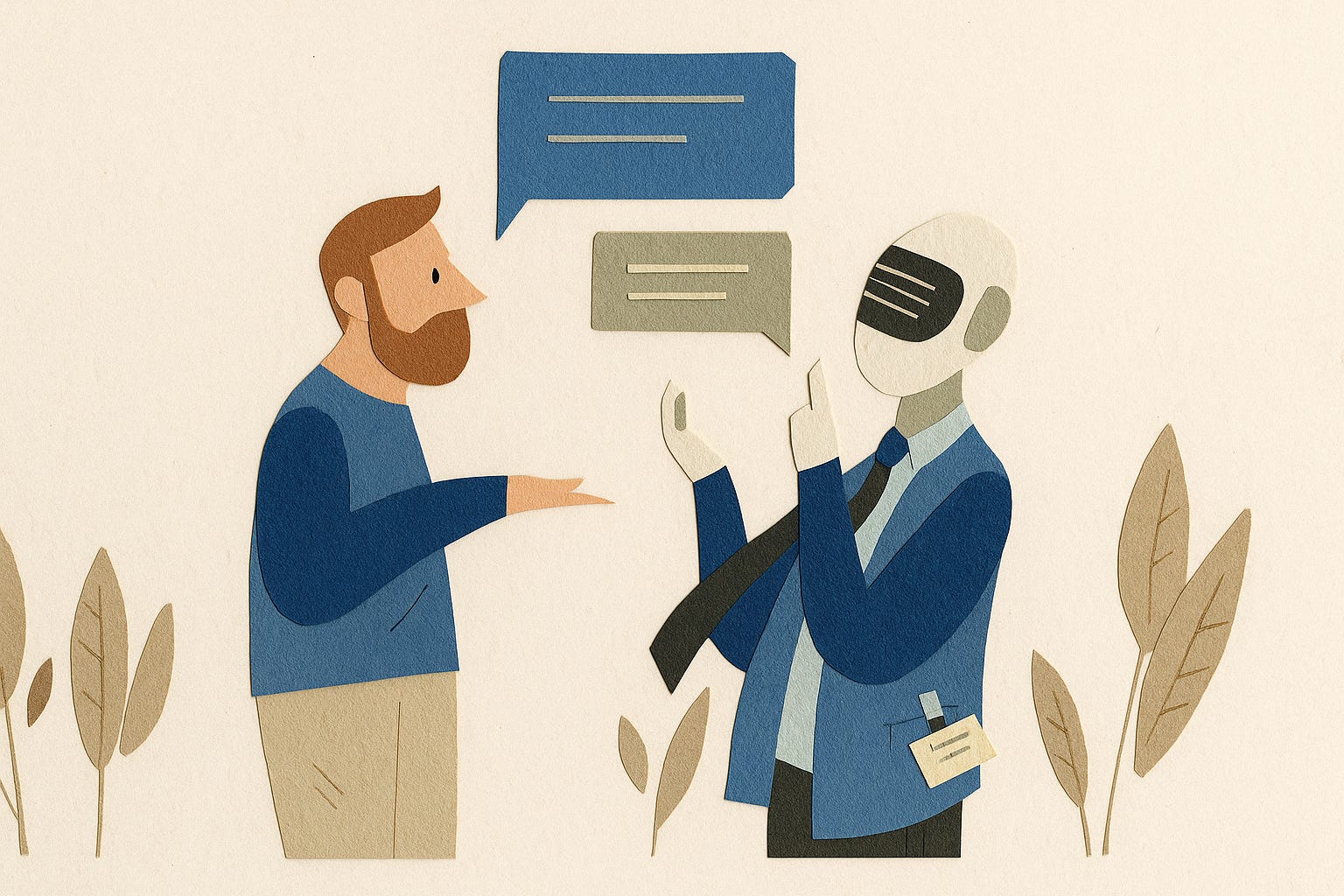
Conversational AI refers to technologies such as chatbots: programs or applications that simulate a conversation with human users, either through text or voice, and virtual assistants that enable natural language processing and understanding. All of this relies on large volumes of data and models trained to replicate human interactions.
The first chatbot
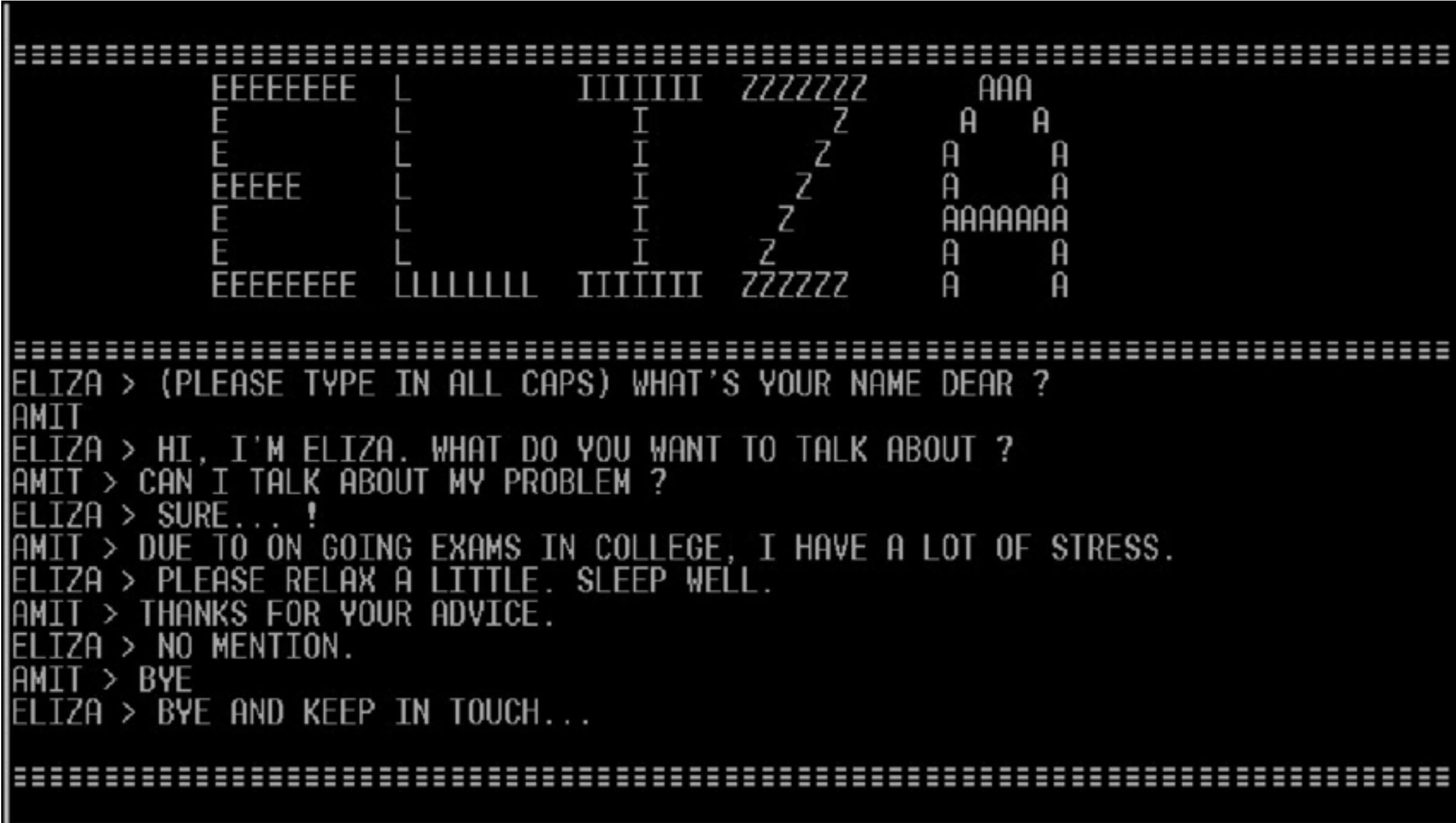
ELIZA is the name of the first publicly known chatbot, created in 1966 by Joseph Weizenbaum at MIT.
It is one of the earliest examples of a natural language processing program and was developed for a healthcare context, designed to simulate a conversation between a therapist and a patient.
The negative "legacy" of chatbots
When talking about conversational AI, we need to address the typical chatbots and their legacy. For a long time, interacting with chatbots was terrible — and you probably remember those days.
These conversational agents are nothing like today's, as they were built with deterministic scenarios, based on decision trees and simple algorithms. With the generative AI revolution, conversational agents gained new attributes, more elasticity, and consequently, more intelligence.
However, much of what users experienced in the past still lives on in their memory and mental models. This last point raises another challenge. Those who used old chatbots, or who are outside the tech bubble, tend to maintain the mental model of searching by keywords rather than conversing naturally.
As soon as the user realizes they are interacting with a system, they apply what they know best: system language.
In recent years, we have seen this mental model shifting, allowing for more natural conversations between humans and AI. Still, recognizing this obstacle is essential to designing good experiences with conversational agents.
How conversational AI works
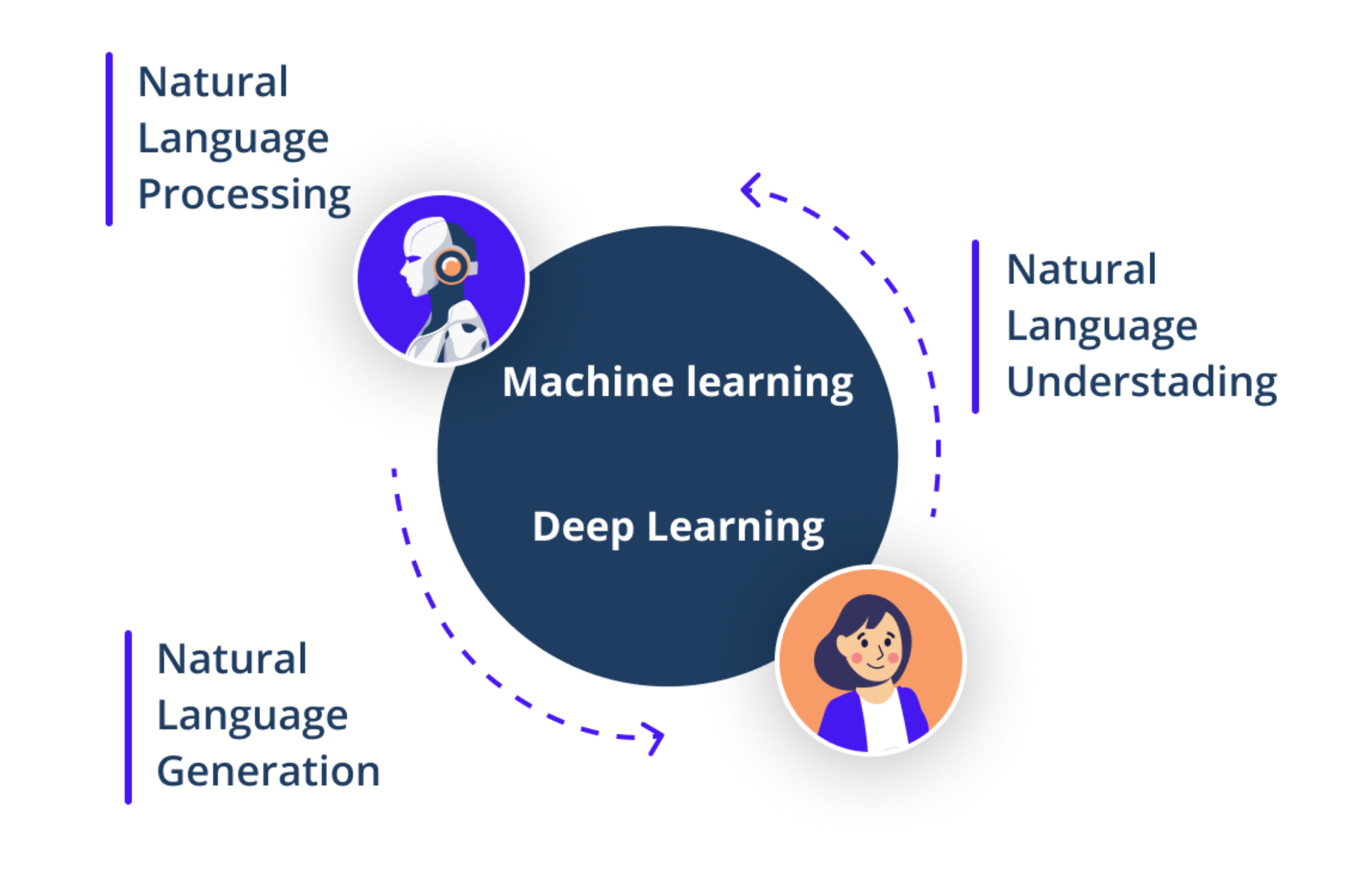
A conversational AI uses a combination of technologies that allow it to reason, understand intentions, and maintain a human-like conversation, such as:
ML (Machine Learning) — automatic learning
DL (Deep Learning) — deep learning
NLP (Natural Language Processing) — natural language processing
NLU (Natural Language Understanding) — natural language understanding
NLG (Natural Language Generation) — natural language generation
The various "modes" of conversational AI
Designing a conversational AI requires considering a set of functional modes:
Voice-to-voice
Text-to-text
Mixed mode, which converts voice to text and vice versa (Kusal et al., 2022)
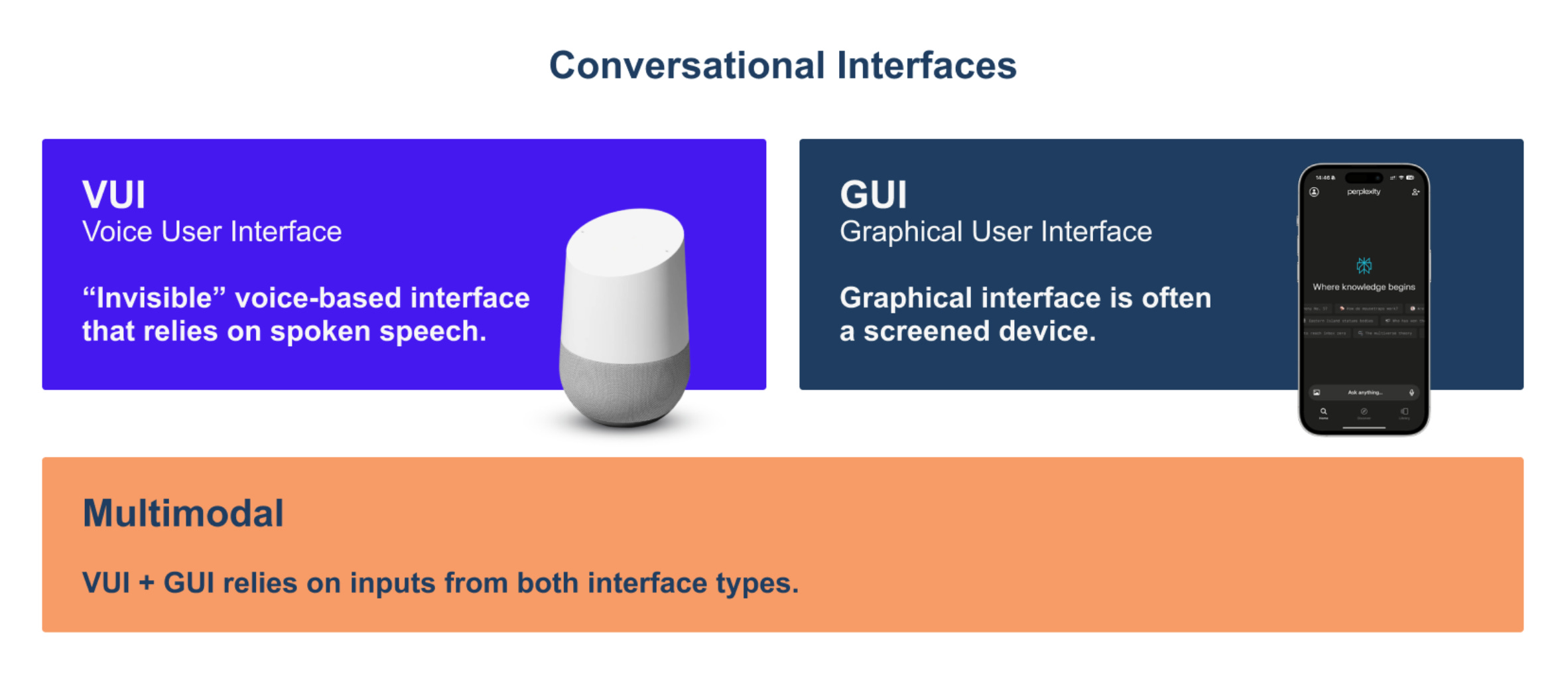
These conversations can occur in voice interfaces, such as Siri or Google Assistant, in graphical interfaces, or in a combination of both.
How to design for conversational AI
I've been sharing some snacks on conversational design, but here's a more holistic view of important points:
Evaluate whether conversational is truly the best approach
Ask yourselves: is this a task people would naturally do out loud? Is it a topic they already talk about?Analyze what is most practical and natural for the user
Speak or type? Or would a traditional interface be better?Start with prompt flows
You can learn more about them in this post.Simulate and test conversations
Think about edge cases
Conversational is probabilistic, unlike traditional design, which is deterministic. Avoid defining everything rigidly and explore possibilities.Include error scenarios
Work together with engineering and data science
Participate in prompt engineering.Also test the model or prompt output
Define AI strategies together
For example, fallback ladder or human in the loop.Run dogfooding or bug bashing sessions
Ensure the entire team has the opportunity to test and explore as many cases as possible.Consider context, intention, and emotion in each response — this changes the perception of the experience.
Take-away
One last snack before closing 🍪
Designing for conversational AI is about understanding how people think, their mental models, and their beliefs. Deciding to create a conversational flow requires intention and several steps to ensure quality of experience.
Any doubts? Leave them in the comments.